Ever lost a key 1v1 fight because your screen stuttered or your mouse missed its mark? That’s not just bad luck. It’s your hardware.
You’re good (maybe) even great (but) your setup isn’t doing you any favors. Trust me, I’ve spent countless hours in competitive play, testing what really works. Too many gamers blame lag instead of looking at the real culprit: their gear.
This isn’t about dumping cash on a whole new rig. It’s about smart, targeted hardware upgrades gamers need to boost performance.
You deserve better than frustration and missed wins. Let’s cut the fluff and get straight to it. This guide promises insight into the most impactful upgrades.
Make the changes that matter, and watch your game level up. Ready for real wins?
The Core Engine: Why Your GPU & CPU Are Your Digital MVPs
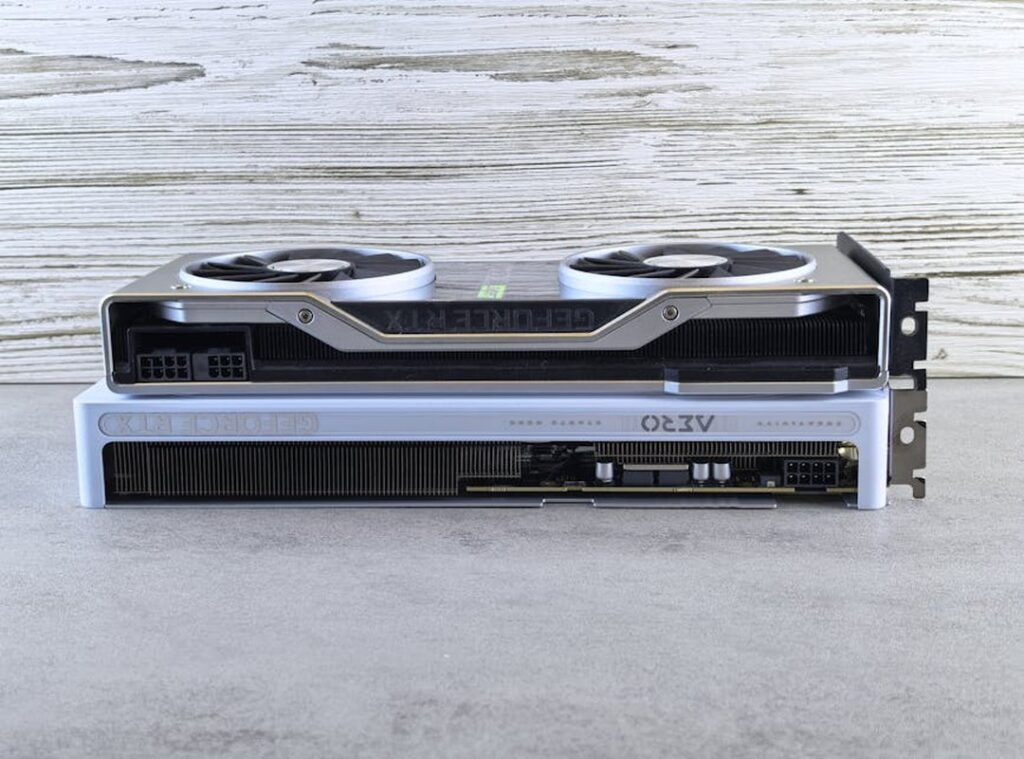
Ever flipped through a flipbook? That’s your graphics card at work. The faster you flip, the smoother the picture.
More flips (or frames) per second means smoother visuals and easier tracking. In fast-paced games, where milliseconds count, your GPU is your best friend. Catching that sneaky sniper or dodging a surprise attack?
Thank your GPU. High FPS gives you that edge.
But don’t ignore the CPU. It’s the game’s brain, crunching numbers in the background. A weak CPU is like trying to run a marathon in flip-flops.
It causes bottlenecks, making your experience stutter and drop frames. Ever been in a chaotic multiplayer battle and everything just lags? Blame the CPU.
It’s all about balance. A strong GPU without a matching CPU is like a race car with a rusty engine. You need both for responsive, lag-free gameplay.
Your actions should happen instantly on screen. Anything less is just frustrating.
So, thinking about hardware upgrades gamers? Remember, it’s not just about the latest GPU or CPU. It’s about how they work together.
A well-balanced combo is key to optimizing your gaming setup performance. Want to dive deeper into this? Check out this guide on optimizing gaming setup performance. Trust me, you don’t want to skimp here.
The right setup can mean the difference between victory and defeat.
In gaming, every millisecond counts. Don’t let your hardware hold you back.
See the Win: Unlocking Your Potential with a Better Monitor
Ever wonder why your gaming isn’t quite hitting the mark? It’s not just you. It might be your monitor.
Let’s talk about refresh rate and response time. They’re the real game-changers.
Refresh rate, measured in Hertz (Hz), tells you how often your screen updates per second. A move from 60Hz to 144Hz? That’s not just a slight improvement.
It’s a massive leap. You get smoother motion clarity, making it way easier to track and aim at moving targets. When you’re in the heat of battle, every millisecond counts.
Now, response time, measured in milliseconds (ms), is about how quickly pixels change color. Lower is always better. A 1ms response time can eliminate “ghosting” (that annoying blur during fast movements).
You want that crisp, clear image when you’re spinning around in a shooter. Who doesn’t?
Resolution versus performance is the ultimate trade-off. Sure, 4K looks stunning. But if it tanks your FPS, what’s the point?
For competitive gaming, I’d say prioritize higher refresh rates and lower response times over sheer resolution. the real gains are.
And if you’re thinking about boosting gaming performance best hardware upgrades to consider, keep these specs in mind. Hardware upgrades gamers need aren’t just about flashy graphics cards. A good monitor can be your secret weapon.
So, what’s holding you back? Time to level up your gear and see the win for yourself.
Upgrade Your Game: Mouse, Keyboard & Headset
Let’s talk about hardware upgrades gamers actually need. First up, the mouse. A high-quality sensor is important for 1:1 tracking without any annoying acceleration or prediction issues.
Ever wonder why your aim feels off? It could be your DPI (dots per inch) and polling rate. DPI is all about sensitivity.
Polling rate? That’s how quickly your mouse talks to your computer. A good gaming mouse gives you consistent muscle memory, which sounds technical but really just means you’ll aim better.
Trust me, you’ll notice the difference.
Now, keyboards. Mechanical vs. membrane: the age-old debate. I’ll cut to the chase.
Mechanical switches are where it’s at for gaming. Faster actuation, distinct feedback, and N-key rollover are game-changers. You want every command to register instantly, right?
Mechanical keyboards do exactly that. Membranes just can’t keep up. If you’re mashing keys in the heat of battle, mechanical is the way to go.
Finally, headsets. Think of a good headset as a tactical tool, not just an audio device. A quality soundstage and accurate directional audio let you hear enemy footsteps, reloads, and ability cues.
It’s like having a superpower in your ears. Imagine knowing exactly where your opponent is before they even see you. That’s the advantage a great headset gives you.
And if you’re looking to boost fps reduce lag games, you might want to check out other gear tips too.
So there you have it. Mice, keyboards, headsets. These aren’t just peripherals; they’re extensions of your gaming persona.
Upgrade wisely and you’ll feel the difference in every click, keypress, and sound cue. Ready to take your setup to the next level? You should be.
RAM & SSDs: Gamer’s Secret Weapons
I’ve always thought of RAM as your computer’s short-term memory. It’s where all the action happens. Think of it like your desk: the more space you have, the more work you can do without tripping over things.
You want at least 16GB if you’re serious about anything beyond casual gaming. With enough RAM, running Discord while streaming won’t turn your game into a slideshow.
Then there’s the massive leap forward with SSDs. The difference between an HDD and an SSD? It’s like going from dial-up to high-speed internet (remember those days?).
You get more time playing and less time staring at loading screens. Games load faster, and levels snap open like a pop-up book.
Gamers can’t ignore these hardware upgrades. Seriously, if you’re still on an HDD, you’re missing out. It feels like an upgrade from a horse and buggy to a sports car.
And who wouldn’t choose the sports car?
Pro tip: if you’re upgrading your rig, prioritize SSDs over fancy RGB lights. They might look cool but won’t improve performance. Hardware upgrades are where the real magic happens.
So, what are you waiting for? Get those upgrades, dive back into your games, and play without limits.
Level Up Your Game Today
You’ve got the blueprint now. Time to ditch the old gear that’s holding you back. Those underperforming pieces?
They’re the reason you’re missing that key shot or lagging at the worst moment. With the right hardware upgrades gamers, you can boost speed, clarity, and responsiveness. It’s not just talk (these) improvements translate directly to better performance in-game.
Picture it: no more blaming your setup. It’s you, competing at your best.
So, what’s your biggest bottleneck? Identify it and make that first upgrade. Seriously, can you imagine how much smoother your next session will be?
It’s right there for the taking. Visit eve2876.com and start upgrading. Don’t wait.
The difference will be night and day. Get your gear, get ready, and dominate.
 Gameplay Analyst
Kyle Kneekeldis has opinions about 2876 multiplayer arena tactics. Informed ones, backed by real experience — but opinions nonetheless, and they doesn't try to disguise them as neutral observation. They thinks a lot of what gets written about 2876 Multiplayer Arena Tactics, Competitive Strategy Breakdowns, Digital Realms and Gameplay Basics is either too cautious to be useful or too confident to be credible, and they's work tends to sit deliberately in the space between those two failure modes.
Reading Kyle's pieces, you get the sense of someone who has thought about this stuff seriously and arrived at actual conclusions — not just collected a range of perspectives and declined to pick one. That can be uncomfortable when they lands on something you disagree with. It's also why the writing is worth engaging with. Kyle isn't interested in telling people what they want to hear. They is interested in telling them what they actually thinks, with enough reasoning behind it that you can push back if you want to. That kind of intellectual honesty is rarer than it should be.
What Kyle is best at is the moment when a familiar topic reveals something unexpected — when the conventional wisdom turns out to be slightly off, or when a small shift in framing changes everything. They finds those moments consistently, which is why they's work tends to generate real discussion rather than just passive agreement.
Gameplay Analyst
Kyle Kneekeldis has opinions about 2876 multiplayer arena tactics. Informed ones, backed by real experience — but opinions nonetheless, and they doesn't try to disguise them as neutral observation. They thinks a lot of what gets written about 2876 Multiplayer Arena Tactics, Competitive Strategy Breakdowns, Digital Realms and Gameplay Basics is either too cautious to be useful or too confident to be credible, and they's work tends to sit deliberately in the space between those two failure modes.
Reading Kyle's pieces, you get the sense of someone who has thought about this stuff seriously and arrived at actual conclusions — not just collected a range of perspectives and declined to pick one. That can be uncomfortable when they lands on something you disagree with. It's also why the writing is worth engaging with. Kyle isn't interested in telling people what they want to hear. They is interested in telling them what they actually thinks, with enough reasoning behind it that you can push back if you want to. That kind of intellectual honesty is rarer than it should be.
What Kyle is best at is the moment when a familiar topic reveals something unexpected — when the conventional wisdom turns out to be slightly off, or when a small shift in framing changes everything. They finds those moments consistently, which is why they's work tends to generate real discussion rather than just passive agreement.