

If you’re searching for a clear, up-to-date breakdown of today’s most exciting game highlights and competitive strategies, you’re in the right place. Modern gaming moves fast—new digital realms emerge overnight, multiplayer metas shift weekly, and even small gameplay tweaks can redefine how matches are won or lost. This article cuts through the noise to focus on what actually matters: core mechanics, evolving tactics, and the performance fundamentals that separate casual play from competitive consistency.
We’ll explore how physics engines in games shape movement, combat realism, and environmental interactions, and why understanding these systems gives you a measurable edge. From arena positioning to loadout optimization and reaction-based decision-making, every section is built to match the intent of players who want smarter strategies—not just surface-level tips.
Our insights draw on hands-on analysis of trending titles, competitive match breakdowns, and performance testing across multiple playstyles, so you can trust that what you’re reading is practical, current, and built for real gameplay improvement.
One second you’re sprinting across a collapsing bridge; the next, planks splinter, ropes snap, and gravity drags everything into the abyss. Or you nail a perfect drift, tires gripping just enough to kiss the apex. These moments feel magical, but they rely on systems developers find intimidating.
This guide breaks down concepts behind physics engines in games, from rigid bodies to collision detection, (yes, even gravity has rules) in English. Physics simulation simply means teaching objects to obey rules like force and mass.
I recommend:
- Start with built-in engine tools before coding solvers.
- Profile performance early to avoid frame drops.
Virtual reality may feel like magic, but its foundation is unapologetically physical. At the core sits rigid body dynamics, a system where objects possess mass, velocity, and rotational inertia yet do not deform under stress. In other words, a virtual crate in a Seattle indie arena behaves like a solid block, not a sponge. Gravity pulls it downward, player input applies forces or torque, and Newton’s laws dictate the outcome. Developers often tune mass values carefully; too light and objects feel floaty, too heavy and interactions become sluggish (which players notice immediately).
Next comes collision detection, the unsung hero of immersion. This process runs in two stages. First, the broad phase quickly filters potential overlaps using simplified shapes like axis-aligned bounding boxes or spatial partitioning grids common in competitive VR shooters. This keeps performance stable at 90 FPS, the gold standard for headset comfort. Then, the narrow phase performs precise intersection tests between actual meshes to confirm contact points and penetration depth. Without this two-step approach, crowded multiplayer arenas would grind to a halt.
Once contact is confirmed, collision response determines what happens next. Impulse is the sudden force exchanged during impact, friction resists sliding motion, and restitution controls bounciness. A high restitution makes a grenade ricochet dramatically; low restitution makes it thud. Some argue hyper-realistic values always improve immersion. However, designers frequently exaggerate parameters for readability and fun (because realism is boring if it ruins gameplay flow).
Finally, constraints and joints connect objects into believable systems. A hinge joint lets a door swing naturally, a ball-and-socket joint powers ragdoll shoulders, and a spring joint simulates suspension in off-road VR racers. Together, these systems form the backbone of physics engines in games. Mastering them separates amateur prototypes from polished, tournament-ready VR experiences. Precision here defines competitive credibility in local circuits.
Choosing Your Toolkit: Physics Engines and Libraries
As players navigate complex virtual worlds crafted by advanced physics engines, they often must also employ resource management strategies, much like those discussed in our article on ‘Resource Management Strategies in High-Stakes Games‘, to maximize their chances of success.
When it comes to physics engines in games, your toolkit shapes everything from how a crate falls to how a skyscraper collapses. So, which route makes sense?
Integrated Engine Solutions
First, consider built-in systems like Unity’s PhysX or Unreal Engine’s Chaos. These are tightly woven into their engines, meaning faster setup and fewer compatibility headaches. The pros are clear:
- Seamless editor integration
- Large documentation libraries
- Strong community support
However, the trade-off is flexibility. You’re often limited to exposed settings, which can restrict experimental mechanics (great for most projects, less ideal for moonshots).
Third-Party Middleware
On the other hand, middleware like Havok offers specialized performance and cross-platform consistency. Studios often choose it for:
- High-performance simulations
- Advanced destruction systems
- Stable behavior across consoles and PC
Admittedly, licensing costs and integration complexity can raise eyebrows. Yet for competitive titles—especially those explored in single player vs multiplayer key gameplay differences explained—precision can outweigh expense.
Custom-Built Systems
Finally, AAA studios sometimes build proprietary engines from scratch. Why? Ultimate control. This allows hyper-optimized performance and entirely unique mechanics. Looking ahead (and this is speculation), AI-assisted physics tuning could make custom systems more common, lowering development barriers while expanding creative freedom.
The Developer’s Dilemma: Balancing Performance, Realism, and Fun
I remember the first time I tanked a game’s framerate by cranking up collision checks. What felt like a tiny tweak turned smooth gameplay into a slideshow. That’s when I truly understood the performance budget—the invisible limit on how much processing power a game can spend per frame. In simple terms, every feature “costs” milliseconds. Go over budget, and players feel it instantly.
To manage this, developers separate the rendering loop (what you see) from the physics tick rate (how often the simulation updates). The physics tick rate is the fixed interval where calculations occur, often decoupled to keep motion stable even if visuals fluctuate. It’s a lifesaver—until multiplayer enters the chat.
In online matches, determinism means every player’s machine must reach the exact same simulation result. Floating-point math, however, can vary slightly across systems, causing desynchronization (and chaos). I’ve seen characters drift apart on two screens like a low-budget sci‑fi glitch.
Still, perfect realism isn’t always the goal:
- Exaggerated ragdoll physics can turn defeat into comedy.
- Tweaked gravity makes jumps feel heroic, not heavy.
- Slight aim assistance improves flow.
Counterpoint: purists argue realism equals immersion. Fair—but fun wins. Even physics engines in games bend reality (and honestly, players prefer it that way).
From Believability to Emergence: The Impact on Gameplay
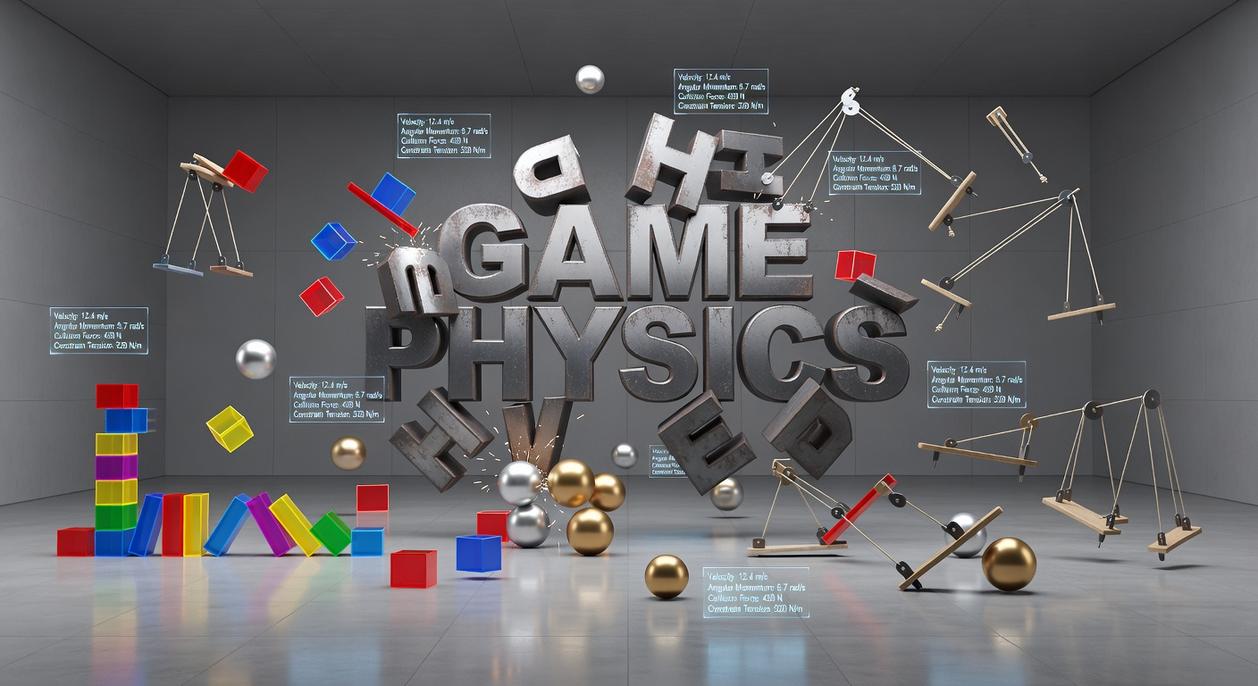
First, enhancing immersion means consistent physics make worlds feel tangible. When a crate falls, it should thud, not float. “If it doesn’t react the way I expect, I’m out,” one player told me. That predictability builds trust.
However, some argue realism slows fun. Yet, when systems interact, magic happens. Creating emergent gameplay allows players to blast a wall and use debris as a bridge (yes, really). These moments arise from physics engines in games working behind the scenes.
Finally, procedural animation adds subtlety—cloth ripples, hair sways, bodies recoil—making every encounter dynamic, alive.
The Next Frontier in Virtual Interaction
Successful physics implementation is a masterful blend of computational science, optimization, and creative design in service of gameplay. Developers constantly balance dynamic worlds with strict performance ceilings, especially when using physics engines in games. Some argue visuals alone sell immersion; yet without responsive systems, even stunning scenes feel hollow (like a blockbuster with no plot).
What competitors rarely discuss is the hidden advantage of constraint-driven design:
- Smart limitation fuels innovation, forcing efficient code and sharper mechanics.
Emerging breakthroughs—real-time fluids, soft bodies, destruction, and machine learning–guided simulations—promise richer play. Start experimenting and shape what’s next.
Level Up Your Gameplay Today
You came here to better understand how modern mechanics, competitive tactics, and physics engines in games shape the way you play—and now you have the clarity to see what separates casual players from consistent winners.
The frustration of losing close matches, misreading mechanics, or feeling stuck at the same rank doesn’t have to continue. When you understand how systems interact, how movement is calculated, and how high-level players exploit small advantages, you stop guessing and start improving with purpose.
Now it’s time to act. Apply one new tactic in your next session. Break down one recent match. Focus on mastering movement, timing, and positioning instead of just grinding hours.
If you’re ready to stop plateauing and start dominating your matches, dive into more advanced breakdowns and performance guides right now. Thousands of competitive players rely on these insights to sharpen their edge—don’t get left behind. Your next win starts with what you do next.
 Founder
There is a specific skill involved in explaining something clearly — one that is completely separate from actually knowing the subject. Ithren Eldricson has both. They has spent years working with 2876 multiplayer arena tactics in a hands-on capacity, and an equal amount of time figuring out how to translate that experience into writing that people with different backgrounds can actually absorb and use.
Ithren tends to approach complex subjects — 2876 Multiplayer Arena Tactics, Game Setup Guides and Performance Tips, Digital Realms and Gameplay Basics being good examples — by starting with what the reader already knows, then building outward from there rather than dropping them in the deep end. It sounds like a small thing. In practice it makes a significant difference in whether someone finishes the article or abandons it halfway through. They is also good at knowing when to stop — a surprisingly underrated skill. Some writers bury useful information under so many caveats and qualifications that the point disappears. Ithren knows where the point is and gets there without too many detours.
The practical effect of all this is that people who read Ithren's work tend to come away actually capable of doing something with it. Not just vaguely informed — actually capable. For a writer working in 2876 multiplayer arena tactics, that is probably the best possible outcome, and it's the standard Ithren holds they's own work to.
Founder
There is a specific skill involved in explaining something clearly — one that is completely separate from actually knowing the subject. Ithren Eldricson has both. They has spent years working with 2876 multiplayer arena tactics in a hands-on capacity, and an equal amount of time figuring out how to translate that experience into writing that people with different backgrounds can actually absorb and use.
Ithren tends to approach complex subjects — 2876 Multiplayer Arena Tactics, Game Setup Guides and Performance Tips, Digital Realms and Gameplay Basics being good examples — by starting with what the reader already knows, then building outward from there rather than dropping them in the deep end. It sounds like a small thing. In practice it makes a significant difference in whether someone finishes the article or abandons it halfway through. They is also good at knowing when to stop — a surprisingly underrated skill. Some writers bury useful information under so many caveats and qualifications that the point disappears. Ithren knows where the point is and gets there without too many detours.
The practical effect of all this is that people who read Ithren's work tend to come away actually capable of doing something with it. Not just vaguely informed — actually capable. For a writer working in 2876 multiplayer arena tactics, that is probably the best possible outcome, and it's the standard Ithren holds they's own work to.