If you’re searching for clear, up-to-date insights on trending game highlights, competitive strategy breakdowns, and multiplayer arena tactics, you’re in the right place. Modern games evolve fast—meta shifts, patches, and new mechanics can change everything overnight. Whether you’re trying to sharpen your gameplay basics or stay ahead in ranked competition, understanding what’s happening right now is essential.
This article delivers focused analysis on current gameplay trends, practical performance tips, and the deeper mechanics that shape competitive outcomes—including the critical role of weapon balancing in games and how it impacts strategy, team composition, and win rates. We break down complex systems into actionable insights you can immediately apply.
Our approach is rooted in hands-on gameplay analysis, close monitoring of patch updates, and careful review of competitive matches across multiple titles. The goal is simple: give you accurate, practical information that helps you play smarter, adapt faster, and gain a real edge in today’s digital arenas.
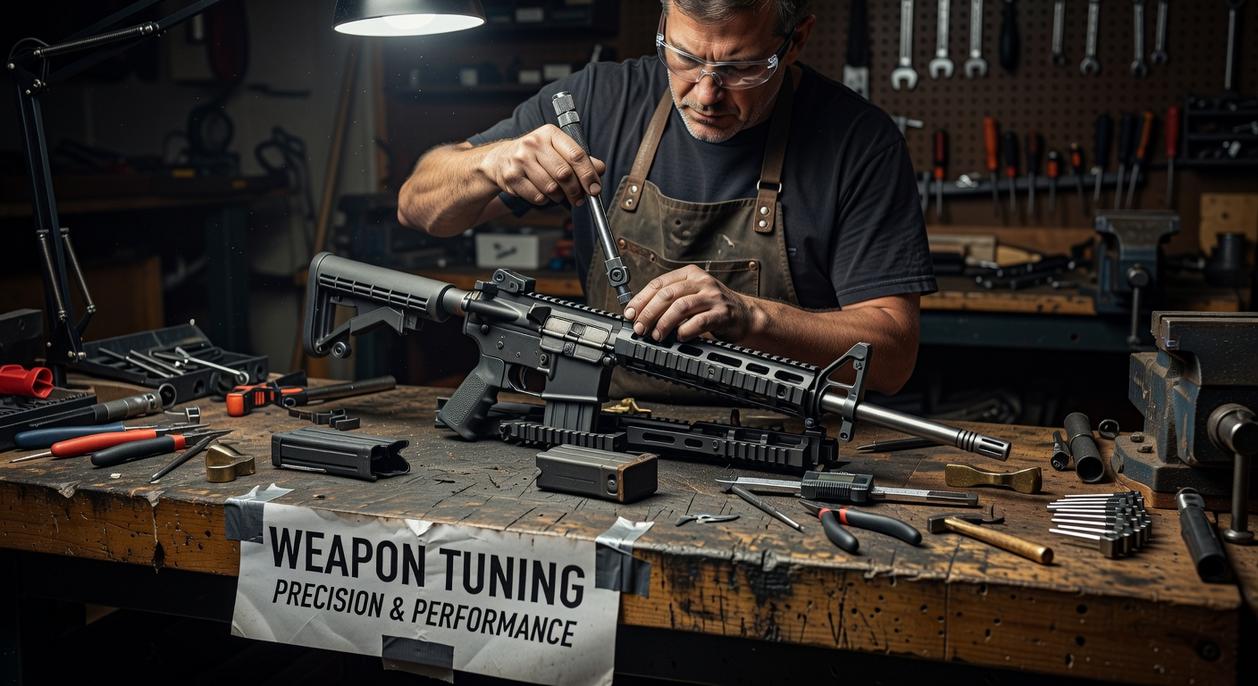
The difference between a perfectly balanced firefight and a one-sided stomp often comes down to invisible numbers. Weapon tuning defines fairness. When damage, recoil, and time-to-kill drift outside tested thresholds, frustration spikes; player churn can rise 20% after major imbalance patches, according to industry retention reports. In analyzing competitive arenas, clear patterns emerge:
- Consistent time-to-kill sustains engagement.
- Predictable recoil rewards mastery.
This framework for weapon balancing in games relies on telemetry, win-rate distributions, and pick-rate variance. Case studies show that narrowing top-tier weapon win rates below 55% restores competitive trust and keeps every encounter meaningfully contested. Balance builds lasting loyalty.
I used to judge every weapon by its DPS stat. If the number was high, I equipped it. If it was low, I ignored it. Then I lost three ranked matches in a row to players using “weaker” loadouts—and realized I misunderstood what makes a weapon truly powerful.
Beyond Damage: The Four Pillars of Weapon Identity
True effectiveness is a composite of multiple factors, not just Damage Per Second (DPS)—the raw amount of damage dealt per second. Think of DPS as horsepower. Impressive on paper, but meaningless if you can’t steer.
Pillar 1 – Lethality
Lethality centers on Time-to-Kill (TTK), the time required to eliminate an opponent. Burst damage weapons delete targets quickly but punish missed shots. Sustained damage options reward tracking and positioning. In fast-paced arenas, lower TTK speeds up engagements; in tactical modes, longer TTK creates room for counterplay (and clutch hero moments worthy of a highlight reel).
Pillar 2 – Utility
Utility refers to non-damaging effects: slows, stuns, area denial, or enemy highlighting. I once carried a low-damage rifle purely because it revealed opponents through smoke. We won not by fragging harder, but by seeing first. Information is often deadlier than bullets. Low-lethality weapons can dominate through control alone.
Pillar 3 – Consistency
Consistency measures reliability: recoil patterns, bullet spread, projectile speed, reload time. High power often trades off with stability. In weapon balancing in games, designers constantly weigh reliability against raw potential. (Pro tip: predictable recoil beats chaotic burst in competitive play.)
Pillar 4 – Skill Ceiling
Skill ceiling describes how much mastery a weapon allows. Easy-to-use guns lower entry barriers; high-ceiling weapons reward precision and creativity without alienating newcomers.
Damage matters. But identity—lethality, utility, consistency, and mastery—is what wins matches.
The Balancing Act: Creating Strengths by Defining Weaknesses
A weapon that does everything well sounds appealing—until it ruins the game. When every tool feels the same, choice becomes an illusion. Meaningful design starts with limits. In other words, strengths only matter when weaknesses exist.
Consider situational viability. The goal isn’t equality in every encounter; it’s relevance in specific ones. A shotgun should dominate tight corridors, while a sniper rifle controls open sightlines. As a result, players gain a clear identity and purpose on the battlefield (and fewer “why did I even pick this?” moments).
Some argue that strict roles feel restrictive. However, defined trade-offs actually expand freedom. When options are distinct, players make strategic decisions instead of defaulting to a single overpowered loadout.
Risk vs. Reward in Action
A sniper rifle offers high reward—a potential one-shot elimination—but carries high risk: slow fire rate, tunnel vision, and vulnerability up close. Meanwhile, an SMG trades lower per-shot damage for mobility and forgiveness. That tension creates excitement and mastery curves.
| Weapon Type | Risk Level | Reward Potential | Ideal Scenario |
|---|---|---|---|
| Sniper Rifle | High |
One-shot kill | Long range |
| SMG | Low | Sustained DPS | Close quarters |
| Rocket Launcher | Medium | Area burst damage | Anti-vehicle |
This ecosystem naturally creates hard counters (a rocket launcher vs. vehicles) and soft counters (SMGs pressuring snipers in tight spaces). Consequently, matches feel dynamic rather than repetitive.
Done well, weapon balancing in games increases replayability, skill expression, and team coordination. It’s the same philosophy explored behind the scenes of esports tournament organization.
Ultimately, defined weaknesses don’t limit players—they empower smarter decisions and deeper competitive play.
Listening to the Data: Key Metrics for Weapon Tuning
Design theory is where balance begins. Data is where it gets real. If you want smart weapon balancing in games, you have to move from “this feels strong” to measurable proof.
Metric 1 – Pick Rate
Pick rate measures the percentage of players choosing a specific weapon. A 60% pick rate in a multiplayer shooter isn’t just popularity—it signals perception. Players believe the weapon is strong, reliable, or fun. On the flip side, a 3% pick rate often means it’s ignored (even if it’s secretly powerful).
Metric 2 – Win Rate / K-D Ratio
Win rate shows how often players succeed when using that weapon. K-D ratio (kill-death ratio) tracks combat efficiency. These metrics reveal actual performance, not just hype.
- High Pick Rate + Low Win Rate: The weapon feels great but underperforms.
- Low Pick Rate + High Win Rate: A niche pick that may be overtuned.
That contrast is where tuning decisions get precise.
Interpreting these metrics together prevents knee-jerk nerfs and buffs. (Yes, the loudest Reddit thread isn’t always right.)
Finally, build a feedback loop. Combine telemetry with forum posts, social clips, and competitive match reviews. Numbers show what is happening. Players explain why. Together, they turn raw stats into actionable balance improvements.
From Frustrating to Fun: Two Common Tuning Scenarios
Let’s compare two classic balance headaches side by side.
Scenario A: The “One-Gun Meta” Problem
An assault rifle dominates at every range. As a result, player choice shrinks (and matches start feeling like copy-paste loadouts). The fix? Increase damage drop-off at long range and widen hip-fire spread. Now it owns mid-range—but loses duels up close or across the map. That’s smart weapon balancing in games: clear strengths, clear weaknesses.
Scenario B: The “Useless Gadget” Problem
Meanwhile, a grenade launcher struggles. Simply buffing damage risks frustration. Instead, expand its blast radius so it flushes enemies from cover. Different tools, different roles. Pro tip: utility often outperforms raw power.
I still remember a late-night playtest where one overpowered rifle turned every match into chaos. That moment taught me that weapon balancing in games is the invisible foundation of a positive player experience. When lethality spikes without restraint, strategy disappears. The solution is deliberate trade-offs across four pillars:
- Lethality
- Utility
- Consistency
- Skill Ceiling
Some argue perfect balance should feel immediate (it never does). In my experience, it’s ongoing—data analysis, patch notes, community debates. Master these principles, and you don’t just fix numbers—you guide player behavior and create deeper, more dynamic, genuinely enjoyable battles.
Step Into Your Next Match With an Edge
You came here to sharpen your understanding of competitive play, refine your tactics, and gain clarity on what separates average players from consistent winners. Now you have a clearer grasp of core mechanics, smarter positioning, sharper decision-making, and the impact of weapon balancing in games on every match you enter.
If you’ve been frustrated by inconsistent performances, close losses, or feeling outmatched in high-pressure moments, the difference isn’t luck—it’s preparation and adaptation. Mastering strategy, understanding shifting metas, and adjusting to balance updates are what turn chaotic matches into calculated victories.
Now it’s your move. Put these tactics into practice, review your recent matches with a critical eye, and stay updated on evolving gameplay trends so you’re never caught off guard. If you’re serious about climbing the ranks and dominating your arena, start applying these insights today and keep refining your edge. The next win is earned before the match even begins.
 Founder
There is a specific skill involved in explaining something clearly — one that is completely separate from actually knowing the subject. Ithren Eldricson has both. They has spent years working with 2876 multiplayer arena tactics in a hands-on capacity, and an equal amount of time figuring out how to translate that experience into writing that people with different backgrounds can actually absorb and use.
Ithren tends to approach complex subjects — 2876 Multiplayer Arena Tactics, Game Setup Guides and Performance Tips, Digital Realms and Gameplay Basics being good examples — by starting with what the reader already knows, then building outward from there rather than dropping them in the deep end. It sounds like a small thing. In practice it makes a significant difference in whether someone finishes the article or abandons it halfway through. They is also good at knowing when to stop — a surprisingly underrated skill. Some writers bury useful information under so many caveats and qualifications that the point disappears. Ithren knows where the point is and gets there without too many detours.
The practical effect of all this is that people who read Ithren's work tend to come away actually capable of doing something with it. Not just vaguely informed — actually capable. For a writer working in 2876 multiplayer arena tactics, that is probably the best possible outcome, and it's the standard Ithren holds they's own work to.
Founder
There is a specific skill involved in explaining something clearly — one that is completely separate from actually knowing the subject. Ithren Eldricson has both. They has spent years working with 2876 multiplayer arena tactics in a hands-on capacity, and an equal amount of time figuring out how to translate that experience into writing that people with different backgrounds can actually absorb and use.
Ithren tends to approach complex subjects — 2876 Multiplayer Arena Tactics, Game Setup Guides and Performance Tips, Digital Realms and Gameplay Basics being good examples — by starting with what the reader already knows, then building outward from there rather than dropping them in the deep end. It sounds like a small thing. In practice it makes a significant difference in whether someone finishes the article or abandons it halfway through. They is also good at knowing when to stop — a surprisingly underrated skill. Some writers bury useful information under so many caveats and qualifications that the point disappears. Ithren knows where the point is and gets there without too many detours.
The practical effect of all this is that people who read Ithren's work tend to come away actually capable of doing something with it. Not just vaguely informed — actually capable. For a writer working in 2876 multiplayer arena tactics, that is probably the best possible outcome, and it's the standard Ithren holds they's own work to.