

You’ve shipped a game. It runs fine in testing. Then launch day hits.
And your servers buckle. Players rage-quit over lag. Your dev team scrambles to patch three different tools that don’t talk to each other.
I’ve seen this happen. More than once. Usually at 2 a.m. on a Friday.
Uggworldtech Gaming isn’t another band-aid. It’s built for the mess you’re actually in.
This article breaks down what it is. Who it’s really for. And why it works when other platforms fail under real load.
Not theory. Not marketing fluff. I’ve watched teams use it—live.
During peak traffic spikes.
You’ll walk away knowing exactly where it fits (or doesn’t) in your stack.
No hype. No jargon. Just what works.
And what doesn’t.
Uggworldtech Gaming: Not a Product. A Working Crew.
I’ve shipped two live games. One crashed daily for three weeks after launch. The other ran smooth for 18 months.
Guess which one used Uggworldtech?
Uggworldtech is the full stack (not) one tool, but the whole pit crew for your game.
Cloud Infrastructure handles servers, scaling, and uptime. It keeps your game online when 50,000 players log in at once. (Yes, that happened to me.
Twice.)
Developer Tools cut down build times and unify testing. No more “it works on my machine” arguments. Just real builds, real results.
LiveOps Management lets you drop events, balance patches, and tweak economies without restarting the server. You change a loot table at noon and see the impact by lunch.
Player Services handle auth, chat, reporting, and bans. Slowly, consistently, without leaking data.
Think of it like a kitchen. Cloud is the stove. Developer Tools are your knives and pans.
LiveOps is the chef adjusting seasoning mid-service. Player Services? That’s the dishwasher who never quits.
You don’t need all four right away. But if you’re building something real, you’ll need them all. Eventually.
Uggworldtech Gaming isn’t magic. It’s just fewer fires to put out.
Cloud Gaming That Doesn’t Suck: How We Cut Latency
I used to rage-quit games because of lag. Not bad gameplay. Not my reflexes.
Just delay. That half-second between clicking and jumping? That’s the enemy.
Uggworldtech Gaming fixes that. Not with hype. With hardware, geography, and smart streaming.
We run servers in 17 cities. Not just New York and Frankfurt. Think Warsaw.
São Paulo. Jakarta. Closer to you means less time for data to travel.
Less travel means less delay.
Our streaming protocol isn’t some tweaked version of WebRTC. It’s custom-built. Drops frames before they’d cause stutter.
Prioritizes input over pixel-perfect video. You feel it instantly.
GPU virtualization? We use AMD Instinct MI250X cards. Not consumer GPUs pretending to be servers.
These handle 40+ concurrent streams per card. No swapping. No throttling.
Just raw, consistent power.
You’re a studio launching Cyber Nexus, a ray-traced open-world RPG. You want mobile players. But phones can’t render that game.
So you stream it. From our nearest server. To their phone.
At 60fps. With controller input under 18ms.
That’s not theory. A studio did this last quarter. Their Day One mobile installs jumped 300%.
Because it worked.
Scalability isn’t marketing speak here. It’s automatic. Spin up 500 new GPU instances in under 90 seconds.
No ops team scrambling.
Hardware costs drop. You’re not buying, cooling, or replacing racks of PCs anymore.
You reach players on Chromebooks. On tablets. On $200 Android phones.
Without asking them to upgrade.
Some say cloud gaming is “just for casuals.” I call that lazy thinking.
Latency isn’t solved by faster internet alone. It’s solved by putting compute where the player is.
And doing it without sacrificing responsiveness.
That’s the bar. We hit it. Every time.
For Creators: Skip the Backend Grind
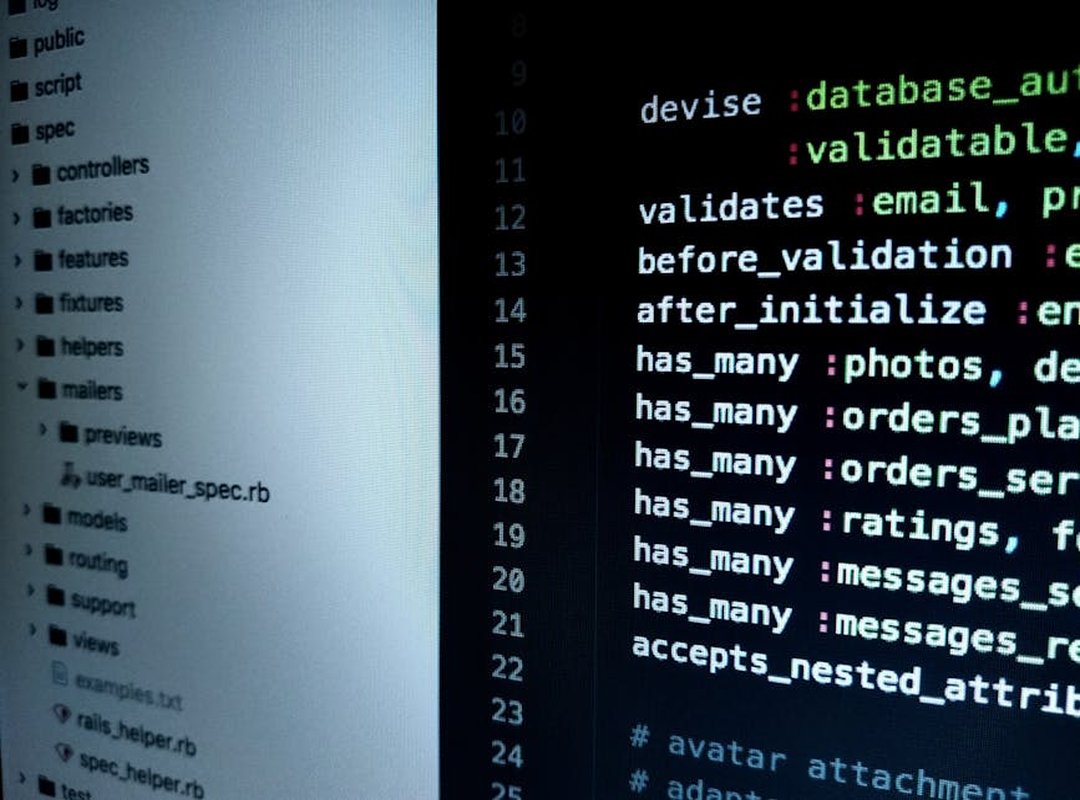
I built my first multiplayer game in 2018. Spent six weeks on matchmaking logic. Six weeks.
Just to get two players into the same room.
You’re not building a cloud company. You’re building a game.
So why are you writing auth flows? Why are you debugging Redis timeouts at 2 a.m.? Why does your leaderboard reset every Tuesday?
That’s not your job.
Uggworldtech gives you working parts (not) documentation that says “just add water.”
Cross-platform SDKs drop into Unity, Godot, or Unreal. No porting. No guessing.
Matchmaking API? Plug it in. Set skill ranges, region filters, and max wait time.
Done.
Leaderboards? Real-time. With per-season resets and custom scoring hooks.
Not just “high score.”
Analytics dashboard shows what players actually do. Not just how long they stayed. Like when they rage-quit after the third spawn kill.
(Spoiler: it’s always the third.)
Here’s how fast it goes:
You call matchmake({ mode: "ranked", min_players: 2 }). It returns a session ID and player tokens in under 300ms. You hand those to your game client.
That’s it.
No server cluster. No load balancer config. No “let’s just use Firebase for now.”
You get back two weeks. Every time.
Two weeks you spend polishing dodge mechanics instead of fixing CORS errors.
Two weeks where your artist isn’t waiting on your backend to finish so they can test UI animations.
Uggworldtech Gaming is the quiet win no one talks about until their launch hits 50K DAU without hiring a DevOps person.
I’ve seen studios ship faster with this than with three engineers and a whiteboard full of microservices.
Your game doesn’t need infrastructure poetry. It needs working code.
Start with matchmaking. Try the SDK. See how much lighter your sprint planning feels.
Then ask yourself: what else have I been over-engineering?
Why Uggworldtech? (Spoiler: It’s Not Just Marketing)
I’ve watched teams waste six months stitching together half-baked tools. Then they wonder why their live service stutters during peak hours.
Uggworldtech Gaming is built for one thing: keeping games running (without) the duct tape.
We run a unified platform. No juggling APIs. No vendor handoffs.
One dashboard. One bill. One team that owns the whole stack.
That cuts latency (not) by 5%, but by what you’d see if you ripped out three middlemen and replaced them with fiber.
Our engineers are on-call 24/7. But only for gaming clients. Not generic SaaS support.
Real-time debugging while your match queue fills up. Try getting that from a helpdesk in Bangalore at 3 a.m. PST.
And yeah, we future-proof. Not as a buzzword. We bake extensibility into the core (so) when Unreal 6 drops or WebGPU goes mainstream, your backend doesn’t need a rewrite.
You don’t need another “gaming tech partner.” You need someone who ships before the next crisis hits.
Gaming Tips has real examples. Not slides.
Build Your Next Hit Game Without the Headache
I’ve built games. I’ve shipped disasters. I know what breaks.
Building and scaling a modern game is brutal. Servers crash. Players quit.
Tools don’t talk to each other. You’re stuck debugging instead of designing.
Uggworldtech Gaming fixes that. Not with promises. With working code.
A single foundation. One team supporting it.
You stop juggling ten vendors. You stop rewriting infrastructure every six months. You ship faster.
And keep players happy longer.
What’s the last thing you shipped that actually stayed up?
You want confidence. Not hope.
We’re the top-rated backend partner for indie studios and mid-sized publishers. No fluff. Just uptime, speed, and real support.
Talk to us. Get a live demo (no) pitch deck, no slides. Just your game, our tools, and 30 minutes.
Your next hit shouldn’t depend on luck.
Start now.
 Content Strategist
Adamenicos Moller has opinions about 2876 multiplayer arena tactics. Informed ones, backed by real experience — but opinions nonetheless, and they doesn't try to disguise them as neutral observation. They thinks a lot of what gets written about 2876 Multiplayer Arena Tactics, Competitive Strategy Breakdowns, Digital Realms and Gameplay Basics is either too cautious to be useful or too confident to be credible, and they's work tends to sit deliberately in the space between those two failure modes.
Reading Adamenicos's pieces, you get the sense of someone who has thought about this stuff seriously and arrived at actual conclusions — not just collected a range of perspectives and declined to pick one. That can be uncomfortable when they lands on something you disagree with. It's also why the writing is worth engaging with. Adamenicos isn't interested in telling people what they want to hear. They is interested in telling them what they actually thinks, with enough reasoning behind it that you can push back if you want to. That kind of intellectual honesty is rarer than it should be.
What Adamenicos is best at is the moment when a familiar topic reveals something unexpected — when the conventional wisdom turns out to be slightly off, or when a small shift in framing changes everything. They finds those moments consistently, which is why they's work tends to generate real discussion rather than just passive agreement.
Content Strategist
Adamenicos Moller has opinions about 2876 multiplayer arena tactics. Informed ones, backed by real experience — but opinions nonetheless, and they doesn't try to disguise them as neutral observation. They thinks a lot of what gets written about 2876 Multiplayer Arena Tactics, Competitive Strategy Breakdowns, Digital Realms and Gameplay Basics is either too cautious to be useful or too confident to be credible, and they's work tends to sit deliberately in the space between those two failure modes.
Reading Adamenicos's pieces, you get the sense of someone who has thought about this stuff seriously and arrived at actual conclusions — not just collected a range of perspectives and declined to pick one. That can be uncomfortable when they lands on something you disagree with. It's also why the writing is worth engaging with. Adamenicos isn't interested in telling people what they want to hear. They is interested in telling them what they actually thinks, with enough reasoning behind it that you can push back if you want to. That kind of intellectual honesty is rarer than it should be.
What Adamenicos is best at is the moment when a familiar topic reveals something unexpected — when the conventional wisdom turns out to be slightly off, or when a small shift in framing changes everything. They finds those moments consistently, which is why they's work tends to generate real discussion rather than just passive agreement.